Start October 8th, Berlin
Successful Institutions, Disappointing Start to Wage Negotiations
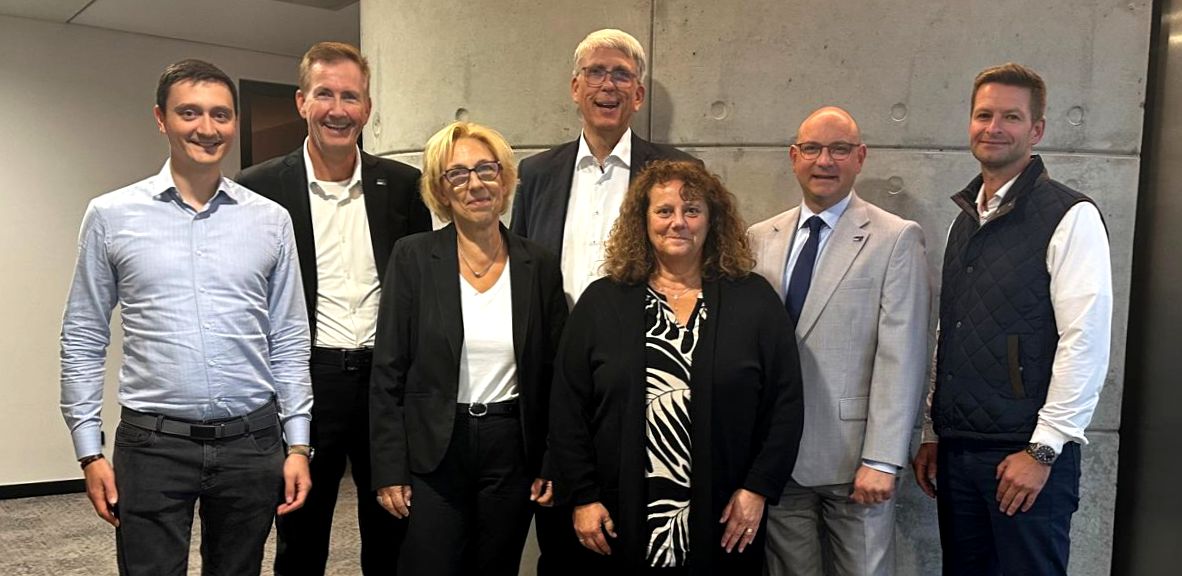
Berlin. The first round of collective bargaining for employees of private banks ended on 8 October, as expected, without an offer from the employers. This is common practice at the outset of negotiations. The disappointment therefore lay less in the absence of an offer than in the reasoning used by the employers’ association of the private banking sector to reject the DBV’s demand for a 9.5% pay increase over a period of 24 months.
Speaking on behalf of the AGV, Dr Thomas A. Lange stated that bank employers were not responsible for their employees’ “personal risk of inflation.” At the same time, he pointed to increased provisions for credit risks, a lack of growth and economic uncertainties. He acknowledged that deposit-taking operations continued to generate healthy profits, but declined to comment on the potential revenue opportunities for investment banking arising from the growing volume of government debt issuance. The employers’ side also described an additional €160 for junior employees as excessive.
“If even industries are unwilling to compensate for inflation, despite being economically capable of doing so, we should not be surprised if domestic demand as a whole continues to stagnate over the long term.”
Wolfgang Ermann, DBV Chief Negotiator for Private Banks
Employees Should Not Have to Pay Twice
Over the past two years, collectively agreed wages in the sector have fallen behind the general trend in nominal wage growth. This makes the renewed calls for “cost discipline” all the less convincing.
“Employees are being asked to pay twice: first, through weak wage growth during the AI investment phase – and later, potentially, through the loss of their jobs when efficiency gains are realised within companies,” said chief negotiator Wolfgang Ermann.
Progress, but No Results Yet
When it came to the additional demands, the employers did not limit themselves to blanket rejection. The AGV is willing to consider resuming negotiations on an obligation to negotiate the further development of the collective framework agreement. Regarding overtime pay premiums for part-time employees, the employers acknowledge that action is needed, particularly in light of the latest case law, and intend to seek a solution. These are not results yet, but they provide concrete starting points for the next round of talks.
The Full Set of Demands Remains on the Table
The DBV has justified its demands not as a wish list, but as a comprehensive response to wage developments, the retention of skilled employees and technological change.
These include:
– A 9.5% pay increase effective 1 October 2026, with a term of 24 months.
– An additional €160 for junior employees across all years of vocational training.
– The option for collectively agreed employees to purchase up to ten additional days of annual leave as a voluntary annual benefit under the collective agreement.
– Making lifetime working-time accounts accessible and providing works councils with a reliable basis under collective agreements for arrangements covering sabbaticals and an earlier transition into retirement.
– Phased retirement under the equal-distribution model, starting 48 months before the individual statutory retirement age, with a monthly gross knowledge-transfer bonus of €1,500 for full-time employees and a pro-rata amount for part-time employees.
– AI-related workload relief and skills development through additional days off in affected areas and an entitlement to accompanying reskilling and further training.
– Equal treatment for part-time employees and legally sound adjustments to overtime pay in line with established case law.
– A binding further development of the collective framework agreement, including up-to-date job criteria, updated role examples, a pathway towards pay grade 10, and a review of how back-office functions, service and operations can once again be reliably represented within the sector-wide collective agreement.
Why We Stand by Our Demands
Pay Must Protect Purchasing Power
Pay must protect purchasing power because employees generate the economic success of the institutions, while collectively agreed salaries have recently lagged behind overall nominal wage growth.
Time and Reliable Transitions Foster Employee Retention
Additional options, lifetime working-time accounts and phased retirement take different stages of life into account while also ensuring the transfer of knowledge.
Technological Change Requires Fair Compensation
Investment in AI can only have a sustainable impact if skills development, workload relief and future employment prospects are considered from the outset.
Collective Agreements Must Reflect Today’s Working Environment
Outdated job criteria, a lack of role examples and the disadvantageous treatment of part-time employees are neither legally robust nor attractive.
Clear, Factual and Respectful
The atmosphere towards our DBV negotiating team was appreciative and respectful. The AGV’s entire collective bargaining commission was present for the DBV meeting, and the carefully structured, fact-based arguments clearly received attention.
Nevertheless, the familiar contradiction remains: when earnings reports are released, the institutions bask in their success. When it comes to the employees who underpin that success, however, those same institutions suddenly appear to be struggling financially and operating in an uncertain environment.
Negotiations to Resume on 2 November 2026
Negotiations will resume on 2 November 2026 in Frankfurt am Main. By then, the initial signs of openness must translate into tangible progress – on pay as well as working conditions.
The Familiar Narrative of Impending Disaster
As early as 2024, the AGV justified its cautious stance by citing economic stagnation, the shift in interest rates and geopolitical risks. In 2026, the starting position sounds familiar once again. Nevertheless, the institutions have demonstrated their earning power while simultaneously investing heavily in accelerating the adoption of AI.
These investments must not be financed twice at the expense of employees – first through weak wage growth and later through staff reductions.
Stay Informed – Subscribe to Our DBV Newsletter…
Stronger Together – Become a DBV Member…
On behalf of the DBV Collective Bargaining Commission,
Wolfgang Ermann
Chief Negotiator for Private Banks
DBV Service

Service
Offers
Legal Protection
Strike Pay Form

Get in Contact
Save on Taxes – Made Easy with Our Partner VLH
You Relax – We Take Care of Your Taxes and Provide Expert Advice
Whether you work in a bank branch or in a back-office role, you are in excellent hands with our partner VLH (Germany’s largest income tax assistance association) when it comes to your tax return. We help you achieve the best possible tax outcome and ensure that you receive all the tax benefits and allowances to which you are entitled.
Exclusive for DBV members: Join VLH now and the one-time membership fee of €10 will be waived.
For more than 50 years, the Vereinigte Lohnsteuerhilfe e. V. (VLH) has stood for personal service, reliability and outstanding professional expertise. With around 3,000 advisory offices throughout Germany, we are always close to our members. Our VLH tax advisers possess extensive specialist knowledge and look forward to welcoming DBV members in particular.
Your Regional Tax Assistance…
Get in Touch directly
"*" indicates required fields